How to Choose a Wedding Venue on the Tyne: A Comparison Checklist for Couples
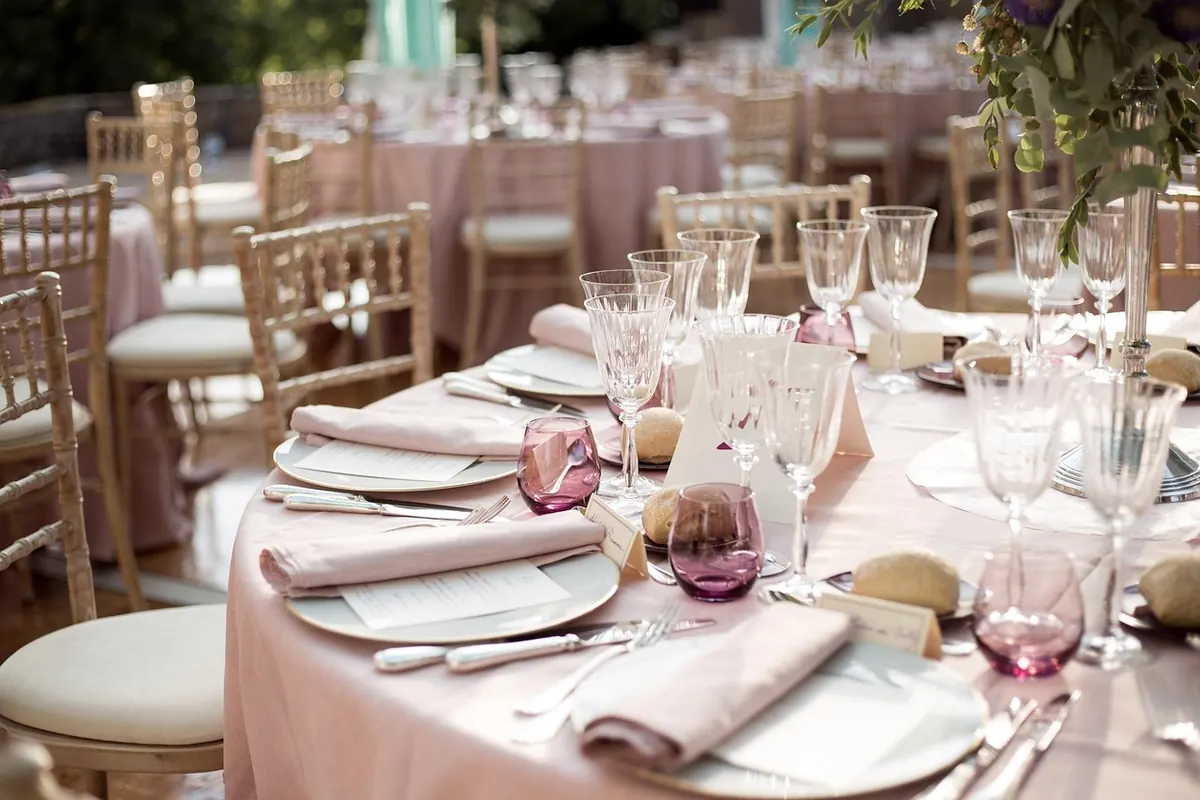
The Tyne does a lot of the work for you. A reception with the bridges lit up behind the top table, or a marquee on a valley field with the river somewhere past the trees, needs far less dressing than a function room beside a retail park. That is why so many couples start their venue search along the water — and end up weighing three quite different options: the riverside hotel, the register office, and the marquee or tipi on a riverside site.
They are not competing on the same terms. A hotel sells convenience and a price list. A marquee sells freedom and a long list of things you have to arrange yourself. The register office sells a short, legal, inexpensive ceremony and leaves you to build the rest of the day around it. To compare them honestly, you need the same four numbers for each: capacity, catering, access and the costs that never appear in the headline quote.
Capacity: ask for three numbers, not one
Most venues quote a maximum that assumes guests standing, no dance floor and nobody needing to get to the bar. Ask instead for three figures: seated for the ceremony, seated for the meal, and standing for the evening. Then ask what happens in between. If the same room has to be turned around between the vows and the dinner, find out how long that takes and where eighty guests go while it happens. A riverside hotel with a separate bar and terrace handles that easily. A single-room venue can leave everyone milling in a corridor for an hour.
Also ask about minimums. Some places will not take a Saturday in summer below a certain guest count or a minimum spend on food and drink, which means a venue that seats 120 can be a poor fit for 60 people. Better to find that out on the phone than after you have fallen for the view.
Riverside hotels: convenience with a price list attached
What you get is a package: a licensed room, a kitchen, staff, a bar, bedrooms upstairs for the out-of-towners, and a wet-weather plan that is simply the building you are already standing in. For a wedding where half the guests are travelling, that combination is hard to beat.
The trade-off is flexibility. Catering is almost always in-house, corkage is usually refused, and the extras mount quietly. Ask whether the quoted per-head price includes VAT, whether a service charge is added, and whether that charge applies to the bar tab and to any extras you book later. If you are reserving a block of bedrooms, check the release date — the point at which unsold rooms stop being your problem. And if there is more than one function room, ask whether yours is exclusively yours, or whether a second wedding will be sharing the same bar and car park.
Register offices: cheapest on paper, tightest on time
A register office ceremony is quick, legal and inexpensive, and the rooms range from a handful of seats to a few dozen. What it is not is flexible. Ceremonies run on a timetable, so you get a slot rather than an afternoon. You will need two witnesses, and you will need to confirm the guest limit for the room you want, the photography rules, whether confetti is allowed outside, and how early you can arrive.
The cost that catches people out is not the ceremony fee but the rest of the day. A register office wedding usually means a reception elsewhere, which means transport, and possibly a two-hour gap while a room is reset. Moving eighty guests across the river on a busy Saturday takes planning. A coach is often cheaper and calmer than a fleet of taxis.
Marquee venues: freedom, and a longer to-do list
This is where you get the riverbank to yourselves and a blank canvas. It is also where the admin lives. Before you commit, get clear answers on power, water, waste, kitchen facilities and road access for a lorry on soft ground. Ask how long the marquee stands — often two or three days either side, charged by the day — and who insures what.
Check the legal side early. In England, a marriage generally has to take place in a register office, a registered building or approved premises; a marquee in a field usually is not one of those, so many couples sign the paperwork elsewhere and hold the celebration under canvas. Rules differ in Scotland, and sites differ everywhere, so confirm the position with the local authority before you book anything. If the sums involved are large, have the contract read by someone who deals with contracts for a living.
Sound is the other variable. A rural site gives you latitude; a marquee near homes or across the water from them does not, and complaints are a real risk on a warm night with the doors open.
The questions that flush out hidden costs
Put these to every venue, in writing, and compare the answers side by side:
- Are the quoted figures inclusive of VAT, and are there any charges that are exempt or added differently?
- Is a service charge applied, and does it cover drinks, corkage and late additions?
- What is the hourly rate if the meal overruns or the bar stays open later?
- Is there a minimum spend, a minimum guest number, or a weekend surcharge?
- What exactly is included in the hire fee — tables, chairs, linen, glassware, dance floor, PA, cake stand, cloakroom?
- What is corkage per bottle, and is there an external-supplier or cake-cutting fee?
- Who pays for additional security, cleaning, damages and lost keys?
- What are the deposit stages, the cancellation terms and the final payment date?
Whichever venue you choose, a sensible rule is to add a contingency to your budget for the things you cannot yet see: extra guests, extra hours, extra taxis.
Access, and the Tyne factor
Access is not just parking, though parking matters. Ask how guests arrive, where they are dropped off, how far they walk, and whether the route is step-free for a grandparent with a stick or a pushchair. Check the last train and Metro times, and the taxi situation at midnight on a Saturday. If your date falls on a match day or a major event, traffic on the bridges and along the Quayside can be far worse than you expect, and a fifteen-minute journey can take an hour.
For anything outdoors or close to the water, ask about tides, drainage and flooding history, and look at the site in the rain before you sign. Then decide where the photographs will happen, and agree an indoor alternative that you would genuinely be happy with.
Score them, then stop deliberating
Write your shortlist across the top of a page and your criteria down the side: capacity fit, catering flexibility, access for guests, wet-weather plan, total realistic cost per head including VAT and service, and one line for how the place felt when you walked in. Score each out of five. The venue that wins on the numbers is usually the one you can stop worrying about, which is worth more than a prettier ceiling.
Book the date, confirm everything in writing, and put the spreadsheet away. The day itself will be better for having a plan you trust and a little room left in it.
Photo: floraboss / Pixabay